
Jun 26, 2026
The Discovery That Changed Medicine
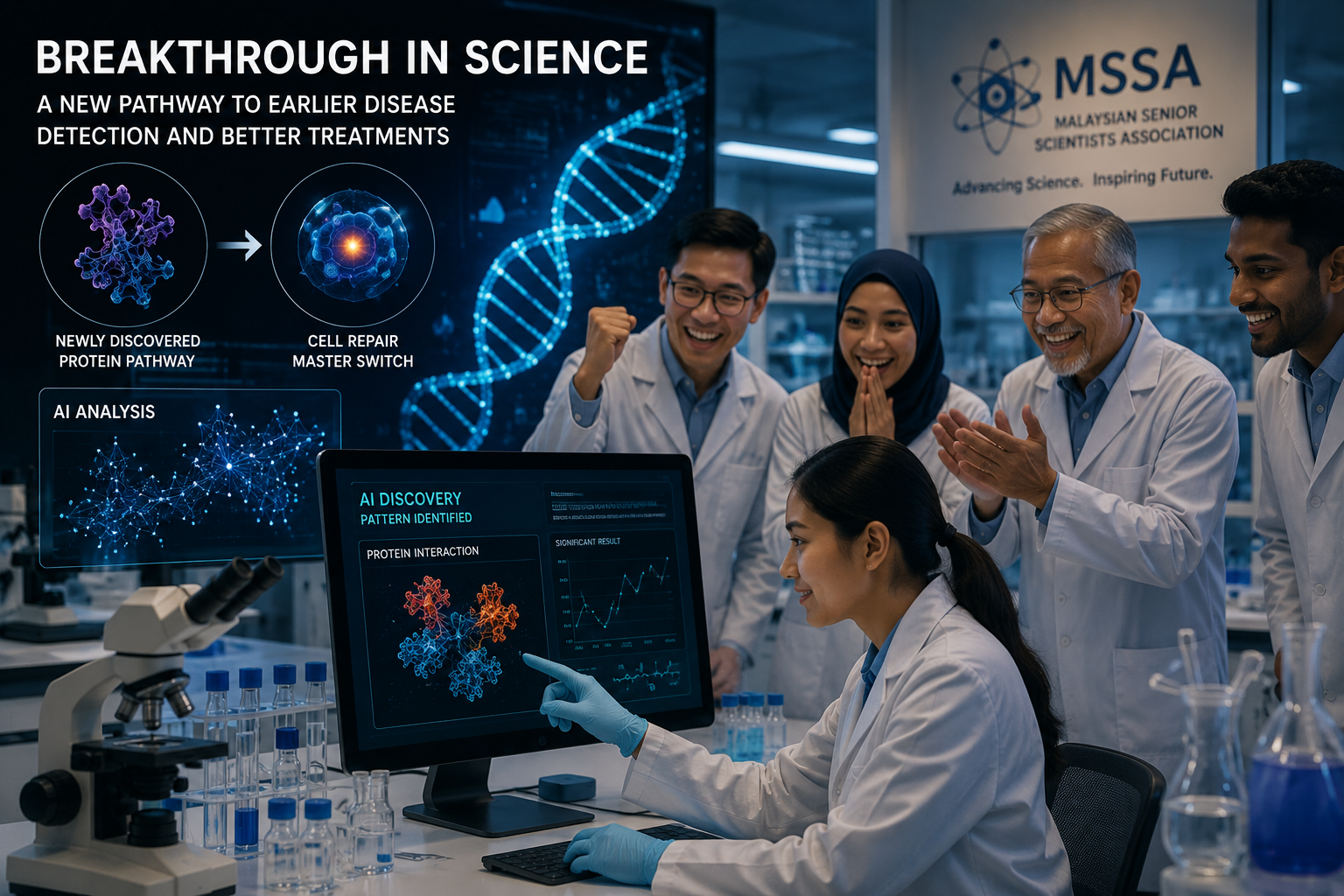
The research laboratory was unusually quiet. Months of experiments had produced nothing but failed results. Dr. Sofia Rahman and her international team refused to give up. They believed that artificial intelligence could unlock secrets hidden within millions of biological data points—patterns too complex for the human eye to recognize.
One evening, the AI system detected an unusual protein interaction that researchers had overlooked for years. At first, the team thought it was another false signal. But repeated experiments confirmed the same remarkable finding.
The protein acted like a master switch, controlling how damaged cells repaired themselves.
The discovery opened a completely new direction for medical science. Instead of treating diseases only after symptoms appeared, scientists could potentially intervene much earlier, preventing certain illnesses from developing in the first place.
Within months, laboratories around the world began validating the findings. Pharmaceutical researchers started designing next-generation therapies based on the newly discovered pathway. The scientific community celebrated not only the breakthrough itself but also the collaboration between human expertise and artificial intelligence that made it possible.
At an international scientific conference, Dr. Sofia addressed a hall filled with researchers.
"Technology did not replace scientists," she said. "It amplified our ability to discover. Curiosity, critical thinking, and collaboration remain the heart of science."
Her words resonated with scientists from every discipline. They understood that modern breakthroughs increasingly depended on combining biology, computer science, engineering, mathematics, and medicine.
Members of the Malaysian Senior Scientists Association (MSSA) later discussed the discovery during one of their scientific forums. Senior researchers highlighted how interdisciplinary collaboration and lifelong learning are becoming essential for solving the world's most complex challenges. They encouraged young scientists to embrace emerging technologies while maintaining the rigorous scientific methods that have always guided research.
The breakthrough reminded everyone that science is not a collection of isolated discoveries. Every advancement builds upon decades of knowledge shared by generations of researchers across the world.
As new treatments moved toward clinical trials, the discovery offered hope to millions of patients and demonstrated that the future of science lies in the partnership between human ingenuity, international collaboration, and responsible innovation.
Science continues to evolve, but its greatest strength remains unchanged: the relentless pursuit of knowledge to improve lives and create a better future for humanity.